

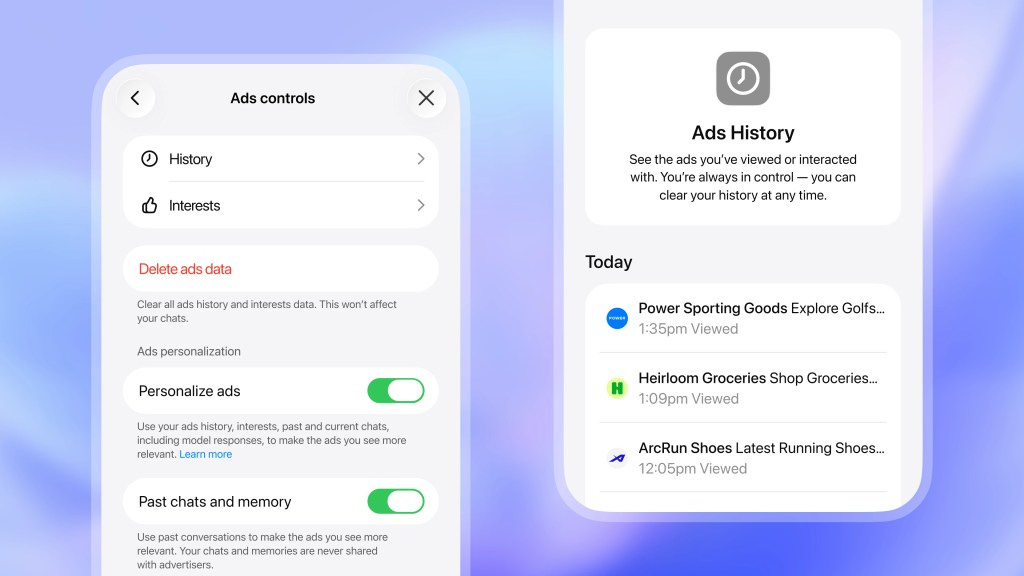
Since February 9, 2026, ChatGPT shows ads.
For now, it is a test. Limited to the United States. Visible only to users on the Free and Go tiers. Ads appear at the bottom of responses, visually separated, clearly labeled as sponsored. Those who pay for Plus, Pro, or Enterprise see nothing.
On the surface, this looks harmless. A familiar pattern: free product, rising costs, advertising as the financing model. Half the internet runs on this logic.
But if you look more carefully, something else is happening.
The Intimacy Problem of AI Chatbots
ChatGPT is not a search result. Not a content channel. Not a social media feed. It is a conversational partner.
People ask it questions they would otherwise ask a consultant. Or a doctor. Or no one at all. The psychological proximity between user and interface is fundamentally different from what we know from Google, Instagram, or YouTube.
Scott Galloway, marketing professor at NYU Stern, made this point with striking clarity after Anthropic’s Super Bowl campaign aired. What makes advertising in AI so different, he argued, is that the dominant use case for ChatGPT is not productivity. It is something closer to therapy. Users confide in it. They share vulnerabilities. They ask for help with relationships, mental health, life decisions.
Now imagine that moment being interrupted by a sponsored message.
OpenAI insists this will not happen. Ads will not appear near sensitive topics, they say. Conversations remain private. Advertisers receive only aggregate data. The model itself does not know when an ad is present.
These are reasonable guardrails. But they are also exactly the kinds of promises every platform has made at the beginning … and abandoned later.
The Pattern We Have Seen Before
Sam Altman himself, speaking at Harvard University in May 2024, called the combination of ads and AI “uniquely unsettling” and described advertising as a “last resort” for OpenAI’s business model. By July 2025, his tone had softened. By January 2026, ads were announced. By February 2026, they were live.
This is not evolution. This is capitulation before the business model that already reshaped the internet once.
Cory Doctorow, author, activist, and one of the sharpest critics of digital platform economics, coined a term for this trajectory: Enshittification. The pattern goes like this: attract users with quality. Monetize their attention. Then gradually optimize for extraction — at the expense of the experience that attracted them in the first place.
Google took this path. Facebook did too. The promises at the beginning sounded remarkably similar to what OpenAI is saying today.
👉 The question is not whether OpenAI means well. The question is whether the incentive structure that advertising creates will gradually shift what “helpful” means inside the system.
Because once a platform earns revenue from showing ads, it faces a structural tension: serve the user or serve the advertiser? Every platform in history has resolved this tension in the same direction. Not because the people running them were dishonest. But because the economics made it inevitable.
The New Fault Line: Ad Platform or Trusted Advisor?
What makes this moment particularly interesting from a marketing perspective is that the competitive landscape is now dividing along the advertising question.
Anthropic built an entire Super Bowl campaign around the promise of keeping Claude ad-free. Four spots. Millions of viewers. The tagline: “Ads are coming to AI. But not to Claude.” The ads were satirical, sharp, and effective. They showed fictional chatbots interrupting intimate conversations with absurd sponsored messages — a mature dating site during a therapy session, height-boosting insoles during a fitness consultation.
Mark Ritson, one of the most respected voices in brand strategy, called it the first piece of effective brand strategy the AI category has produced.
Sam Altman responded publicly and called the campaign “dishonest” and Anthropic “authoritarian.” The intensity of his reaction tells you something: Anthropic hit a nerve.

Google has signaled that Gemini could follow a similar path toward ad integration. Perplexity has already experimented with sponsored placements in its AI search results.
A new fault line is emerging in the AI industry: Who becomes an advertising platform? And who deliberately does not?
This is not a technical distinction. It is a strategic one. And it will shape which AI systems marketers trust, which ones consumers trust, and which ones ultimately mediate the relationship between brands and buyers.
What This Means for Marketers
For marketing professionals, the immediate implication is clear: a new advertising channel is opening. ChatGPT has over 800 million weekly users with high intent. OpenAI has already onboarded major advertisers through its Ad Pilot Program. Omnicom Media has secured placements for more than 30 clients across verticals from automotive to retail. Adobe is running pilot ads for Acrobat Studio and Adobe Firefly. The minimum commitment is reportedly $200,000.
This is relevant. And it would be naive to ignore it.
But the deeper question is strategic, not tactical.
If AI interfaces increasingly mediate product discovery, comparison, and purchase decisions, then the boundary between “helpful answer” and “advertisement” becomes the most consequential line in digital marketing. And the entity drawing that line is not a regulator or an industry body. It is the AI company itself.
👉 Today, OpenAI says ads do not influence ChatGPT’s answers. But the question is not about today. It is about what happens when advertising revenue becomes 10%, 20%, 30% of OpenAI’s income. When optimizing ad relevance means optimizing conversation data. When “helpful” and “commercially valuable” gradually converge until no one can tell the difference anymore.
We have seen this movie before. We know how it ends.
When Monetization Enters Cognitive Space
The issue is not whether ChatGPT displays a banner ad at the bottom of a response.
The issue is what happens when the most trusted interface of our time adopts the structural logic of the advertising market.
Traditional advertising operates in contexts where people expect to be sold to: a television commercial break, a billboard, a sponsored search result. The social contract is transparent. You know you are in a commercial environment. Your cognitive defenses are active.
AI conversations are different. They operate in a space of cognitive intimacy. Users lower their defenses. They share context they would not share with a search engine. They accept recommendations with a trust level that resembles personal advice, not commercial suggestion.
When monetization enters this cognitive space, neutrality stops being a feature. It becomes a governance problem.
Who audits whether an AI’s recommendations are genuinely optimal for the user or subtly shaped by commercial incentives? Who defines the threshold between “relevant sponsored content” and “manipulative placement”? Who ensures that the wall between organic answers and advertising holds — not just at launch, but five years from now, when revenue pressure intensifies?
These are not hypothetical questions. They are the defining regulatory and strategic questions of the next decade in marketing.
Where This Leaves Us
OpenAI’s move to introduce advertising in ChatGPT is not surprising. It follows a financial logic that is difficult to argue with. Running large language models at scale is extraordinarily expensive. Subscription revenue alone may not cover the costs. Advertising offers a path to sustainability.
But sustainability and integrity are not the same thing.
The platforms that shaped the last two decades of digital marketing … Google, Facebook, Amazon … all started with promises about user-first design. They all built advertising models that gradually shifted incentives. They all ended up in a place where user trust became a cost of doing business rather than a foundation for it.
The AI industry now faces the same fork in the road. And the decisions being made right now — by OpenAI, by Anthropic, by Google, and by the marketers who allocate budgets to these channels — will determine whether AI interfaces become the next generation of trusted advisors or the next generation of ad platforms.
We should watch very closely.
Yours,
Prof. Dr. Andreas Fuchs 🦊🎓
I’ll be honest, I thought that it would take longer for enshittification to hit the AI landscape. Usually that happens when the industry and the companies are more mature, but then again, everything is moving so fast these days…
I don’t think it will take long for the other AI platform to introduce the same, honestly.