

This is a practical deep dive from Future of Marketing. It is based on my own experience growing this Substack to over 1,000 subscribers in a few months, using LinkedIn as the primary distribution channel.
Most Substack writers face the same quiet frustration. They write thoughtful pieces. They publish consistently. They invest hours into research, structure, and clarity. And then … almost nothing happens.
The reason is not the quality of the writing. It is the absence of distribution.
Substack rewards depth, not reach. It builds relationships, not audiences. That is its strength — but also its limitation for anyone starting out. The question is not how do I write better? It is: how do I get the right people to discover that I write at all?
For me, the answer has been LinkedIn. Not as a promotional channel. Not as a place to drop links. But as a reach lever — a system that creates visibility, builds trust, and converts attention into subscribers. With nearly 6,000 followers on LinkedIn, the platform has become my most important distribution channel — not because of the follower count itself, but because of the system behind it.
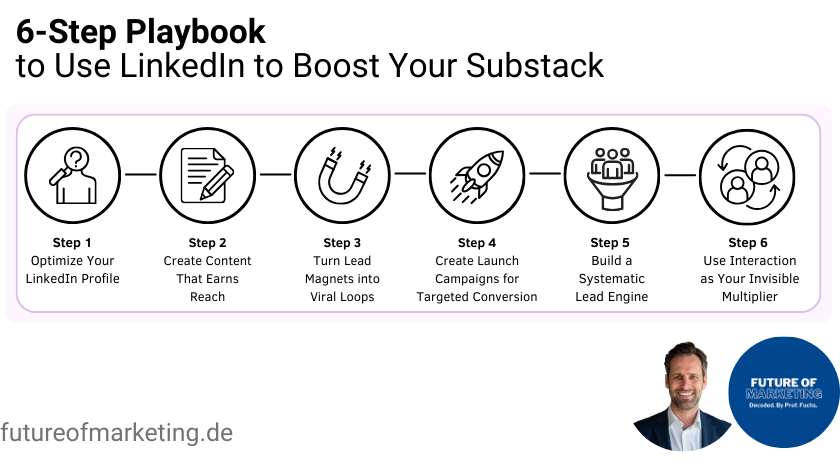
In this playbook, I share what I have learned. Step by step. With real examples, real numbers, and real principles.
👉 Read this article to the end.
Why LinkedIn? The Logic Behind the Lever
LinkedIn is not social media in the traditional sense. It is a professional attention market. People come with an intent to learn, to stay current, to signal competence. That creates a natural alignment with what Substack offers: long-form, expert-driven content for professionals who want to go deeper.
LinkedIn creates reach. Substack creates depth.
LinkedIn’s algorithm amplifies content that generates engagement — comments, dwell time, conversation. But 1,300 characters in a feed post is not enough to build a real argument. That is where Substack takes over. Your LinkedIn profile becomes the bridge. Your posts become the invitations. Your Substack becomes the destination.
👉 Think of LinkedIn as the storefront and Substack as the workshop. One catches attention. The other earns trust.
Step 1: Optimize Your LinkedIn Profile as a Conversion Path
Your LinkedIn profile is not a resume. It is a landing page.
Every element should answer one question: Why should someone subscribe to your Substack?
Most profiles fail here because they try to communicate everything — job history, skills, endorsements, publications. But for Substack growth, your profile needs to do one thing well: make the path from curiosity to subscription as short as possible.
Here is a mini checklist you can apply immediately:
Banner: Use one clear message and one clear CTA. Your Substack link should be visible at first glance. Do not clutter the banner with logos, titles, and decorative elements. One message. One action.
Headline: State who it is for and what transformation you offer. Not your title. Your promise. My headline, for example, does not just say “Professor of Marketing.” It says what I do and why it matters.
About / Info section: This is where proof, offer, and link come together. Lead with credibility, explain what your Substack delivers, and make the link easy to find. Do not bury it at the bottom.
Featured section: Pin your best-performing post and your Substack landing page. This is prime real estate — use it.
Premium / Newsletter button: LinkedIn Premium allows you to add a custom button that links directly to your Substack. This is your primary conversion path. Make it point to your Substack, not your website.
Consistency check: The same promise should appear across banner, headline, and About section. No mixed messages. If your banner says “Future of Marketing” but your headline talks about consulting, you create friction.
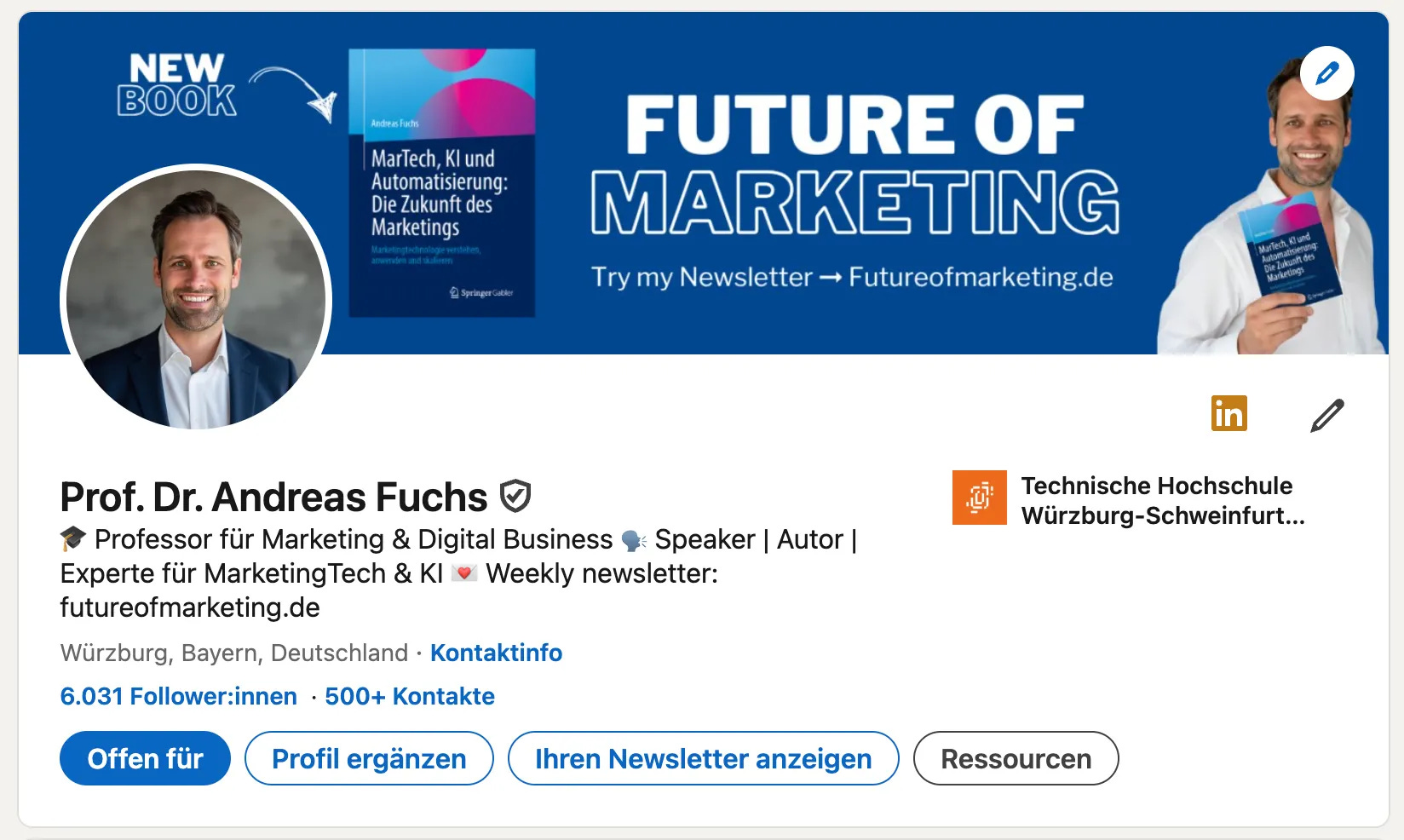
👉 Your profile is not about you. It is about the person visiting it and the question they carry: Is this worth my attention?
Step 2: Create Content That Earns Reach
LinkedIn’s algorithm is not a mystery. It follows a set of principles that, once understood, can be leveraged deliberately. Not to game the system — but to ensure that good content actually reaches the people it was written for.
Here are the five algorithm principles that matter most:
1. Early engagement matters. Strong activity in the first one to two hours after posting increases distribution significantly. The algorithm tests your content with a small initial audience and then decides whether to expand its reach. What to do: reply fast to comments, ask follow-up questions, and keep conversation threads alive.
2. Dwell time and depth. Posts that people actually read — not just scroll past — tend to be shown to more people. What to do: write for clarity, use structure, and make the first lines irresistible. The hook is not a trick. It is a promise.
3. Comments carry more weight than likes. A like is a nod. A comment is a conversation. LinkedIn treats comments as a deeper engagement signal. What to do: invite opinions, trade-offs, and real experiences. Ask questions that are worth answering.
4. Network relevance. LinkedIn starts by testing your content within your own network before expanding beyond it. What to do: speak to a clearly defined audience and publish on consistent topics. If your content is about marketing one day and cryptocurrency the next, the algorithm cannot find your audience.
5. Conversation loops. Every reply to a comment keeps the post “alive” in the feed. What to do: respond with genuine follow-up questions, tag people when relevant, and treat the comment section as an extension of the post itself.
The Do / Don’t principle is simple:
Do: reply within the first hour, turn comments into discussions, and be specific.
Don’t: drop links too early, ignore comments, or write generic takes that could apply to any industry.
👉 The algorithm does not reward cleverness. It rewards engagement. And engagement starts with relevance.
Premium subscribers unlock: The exact lead magnet strategy that generated 190,000 impressions and 2,100 comments from a single post. The launch campaign sequence I used (with real screenshots). My direct outreach system for targeted subscriber conversion. And the full metrics breakdown showing which tactics drove the most subscribers per hour invested.